The Global Grid: An Open Letter to a Fragmented Internet
Why the centralized cloud is a relic of the past, and how we are building a unified, location-transparent world-state for the next billion connections.
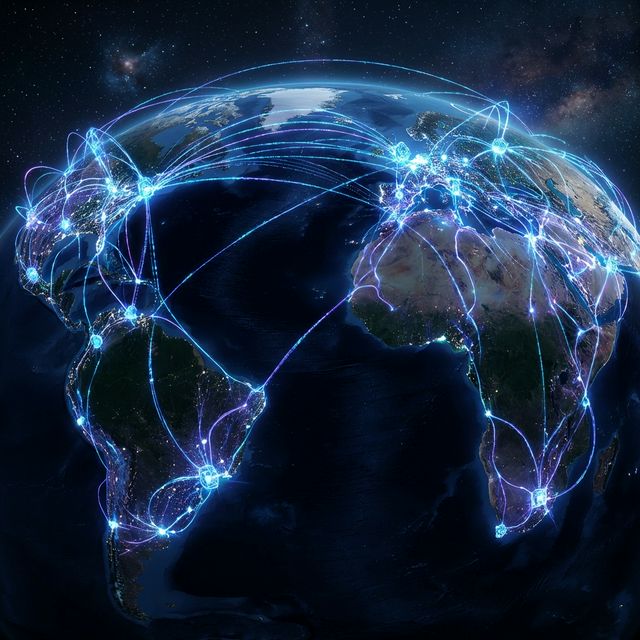
The original promise of the internet was decentralization. It was supposed to be a resilient, anti-fragile web of peers; a “network of networks” designed to survive even a nuclear strike by simply routing around failure. But somewhere in the last fifteen years, we lost our nerve. We retreated from the edges. We consolidated the entire digital collective into the hands of three or four “Cloud Giants,” trading our technical sovereignty for the convenience of a web console.
We have built a global nervous system that is dangerously fragile, physically biased, and drowning in its own latency.
Koda Zenith is our proposal for a different path: The Global Mesh.
The Ghost in the Machine: Why Virginia is Not the World
When the industry talks about “The Cloud,” they are usually using a euphemism for a massive, windowless concrete box in Ashburn, Dublin, or Tokyo. This centralized model has served us well for the static web of the 2010s, but it is fundamentally incompatible with the laws of physics that govern our future.
Consider a developer in Jakarta building a low-latency spatial bridge for VR. Even if they use the most advanced “Edge” proxy from a traditional provider, the actual business logic, the state, and the database often remain tethered to an “Availability Zone” on the other side of an ocean. Light travels through fiber optics at roughly 200,000 km/s. In a best-case scenario, crossing the Pacific and back introduces a “physical baseline” of 120ms+ of lag before a single line of code even executes.
This is what I call Technological Colonialism. We are forcing the entire world to wait on the heartbeat of a few central hubs. The Zenith Global Mesh flips the script: your backend doesn’t exist somewhere else. It exists everywhere, living in the ephemeral space between nodes.
Centralized Stagnation vs. The Zenith location-transparent Mesh
Leveraging the BEAM: The Circulatory System of the Web
To build a true Global Mesh, we couldn’t just use another “modern” framework. We needed a runtime that was born in the fires of telecom reliability—one that understands Distribution not as a feature, but as its only way of life. We chose the Elixir/Erlang BEAM.
The BEAM provides us with something that Kubernetes, Docker, and REST can never match: Location Transparency. In a Zenith cluster, a process running on an edge-node in Paris can send a message to a process on a device in Seoul using the exact same semantics as if they were running on the same CPU.
While the rest of the world is busy writing complex “Microservices” connected by fragile, overhead-heavy HTTP calls, Zenith is building a single, global, fault-tolerant supercomputer. We aren’t “deploying” to the cloud; we are injecting logic into a living organism.
Chaos as a Protocol
In the Zenith network, failure is not an “incident”—it is a predictable part of the system’s respiratory cycle. We don’t pray for 99.999% uptime of a single server; we design for the inevitable death of any individual component.
Every Zenith node is part of a massive Supervisor Tree. If a data center in London goes offline due to a power outage, the Zenith mesh doesn’t trigger an alert for a human to wake up at 3 AM. Instead, the mesh detects the network partition, verifies the loss of the node, and automatically redistributes the “World-State” to the nearest healthy peers in less time than it takes to blink.
The Dream of a Unified World-State
We are moving past the era of “Databases” and into the era of the Unified Substrate.
In the old world, you have a database in one place and your users in another. In the Zenith world, data is a liquid. When you write a “Variable” or update a “State” in Koda Zenith, you aren’t just hitting a disk. You are committing to a global consensus. This data is indexed and available globally, protected by the memory-safety of Rust at the local level and the indestructible distribution of Elixir at the mesh level.
Whether it’s a player’s coordinates in a persistent VR multiverse, a secure ledger entry in a Web3 bridge, or a neural stream from a BCI—it all lives in the same shared reality. We have finally solved the problem of where the data is. The answer is: wherever it is needed.
A Call to Reunite the Grid
The internet has been fragmented for too long. Sliced up into “Regions,” “VPCs,” and “Availability Zones” that serve the billing departments of tech giants more than they serve the architects of the future.
We are calling on the thinkers, the infrastructure providers, and the visionaries to help us deploy the Zenith Mesh. Stop thinking about “Servers” as static, isolated boxes. Start seeing them as Bridges. We aren’t just building a faster backend; we are rebuilding the foundation of how humans connect across distance.
The grid is waiting to be built. It’s time to plug in.